




Register to get free articles
Want unlimited access? View Plans
Already have an account? Sign in
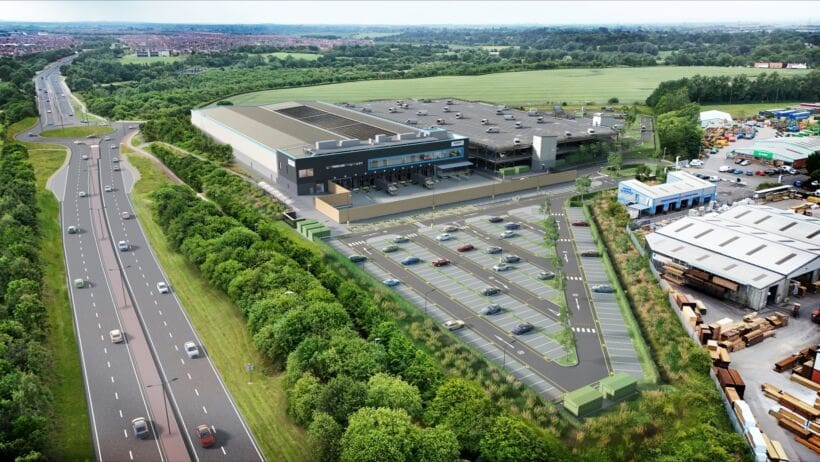
Amazon has announced that it is investing £40m in a new sustainable delivery station in the UK, which aims to become its first building to achieve Living Future’s Zero Carbon Certification.
The company has now broken ground on the Stockton-on-Tees site, which will create around 100 jobs while “setting new standards for lower-carbon logistics buildings across the UK and Europe”.
The 10,800m² building will use lower-carbon steel with high recycled content, produced using renewable electricity, as well as mass timber beams which will lower the carbon footprint of traditional building methods.
Amazon is also testing four technologies at the site, including cement-free paving and carbon-storing concrete, which embed captured carbon dioxide directly into the building blocks.
Meanwhile, AI-powered carbon tracking will monitor emissions across all the building systems, including wiring and plumbing, while photo-based material tracking will use image recognition to track materials in real-time to reduce construction waste.
Amazon said it expects total construction emissions to be at least 20% lower than its previous design standards, and predicts that once fully operational this autumn, the site will use around half the energy compared to a typical logistics building.
Operational power will come from 1,400 square metres of rooftop solar panels, and an all-electric heating system and water-saving fixtures will reduce consumption by 20%.
The project is registered for the Living Future Zero Carbon Certification and the UK Net Zero Carbon Buildings Standard. Third-party assessors will review its performance data in 2027.
The development is part of a wider plan by the company to invest £40bn in the UK between 2025 and 2027, including investments in infrastructure and AI innovation.
UK director of Amazon Logistics, Prajvin Prakash, said: “Decarbonising buildings means tackling both how we build and how we operate. This site shows how we’re using smarter materials, advanced technology, and AI-driven insights to cut emissions from day one and improve performance over the long term.”