Popular now
UK retail footfall decline slows in January

UK retail footfall decline slows in January

Asos head of loyalty Macy Hong departs

Asos head of loyalty Macy Hong departs

Footasylum CEO departs as it begins ‘new growth phase’

Footasylum CEO departs as it begins ‘new growth phase’

Amazon infiltrated by fake review sites, Which? report finds

On this episode of Talking Shop I am joined by Zipline CEO and co-founder Melissa Wong. We discuss how Melissa’s 10 years’ of frontline experience informed her approach to building a SaaS company, the recurring operational frustrations that most head offices still underestimate, and why she believes technology should be designed with the store associate as the primary user. We also explore current trends in store execution and how retailers can bridge the gap between corporate strategy and the shop floor.

Register to get 2 free articles

Reveal the article below by registering for our email newsletter.

No spam Unsubscribe anytime

Want unlimited access? View Plans

Already have an account? Sign in

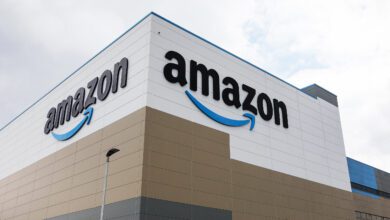
A Which? investigation has uncovered a “thriving” industry of review manipulation businesses targeting Amazon, despite ongoing measures to combat fake reviews on its platform.

Amid growing competition between sellers, Amazon, which sold an estimated $295bn (£212bn) worth of products worldwide in 2020, has seen a rise in sellers “turning to experts who have built a business from gaming Amazon’s system”. 

In December 2020, Which? signed up to 10 sites offering review manipulation services, including free or discounted products in exchange for reviews, or sales campaigns for sellers to boost their positive reviews. 

Through its investigation it discovered 702,000 product reviewers across just five businesses, with one site claiming to have processed $8.9m (£6.4m) of rebates on products for sale on Amazon since launch.

It also uncovered review campaigns claiming to be able to achieve Amazon’s Choice status on products in just 10-14 days, as well as one site selling contact and social media details for Amazon reviewers.

Which? noted that this practice is against Amazon’s terms and conditions, while all transactions between buyers and sellers on the platform must happen through Amazon’s own encrypted email service.

Amazon told Which? that it has “clear policies” for both reviewers and selling partners that prohibit abuse of its community features, and that it suspends, bans, and takes legal action against those who violate these policies, and analyses more than 10 million reviews weekly. 

It added that it and other online retailers “can’t do this alone”, however, and that the “systematic” manipulation of reviews needs consistent enforcement and global coordination with stronger enforcement powers given to regulators.

To protect consumers from being misled, Which is now calling for “swift and effective” action that puts a stop to sites that are trading, or facilitating the trading of fake reviews, a practice which it says is likely to be in breach of consumer law. 

It added that online platforms, including Amazon, must also do more to proactively prevent fake reviews infiltrating their sites. 

In response to the findings, a CMA (Competition and Markets Authority) spokesperson said: “Fake reviews are a blight that stop consumers getting a fair deal. We are determined to do all we can to stamp it out and will examine any new evidence. 

“Thanks to our intervention, Facebook, Instagram and eBay have already committed to tackle the trade of such reviews on their sites and we’re not stopping there. We are also separately investigating several major websites to make sure they are protecting people from fake reviews.”

Previous Post
Cox and Cox sees FY sales up 75%

Cox and Cox sees FY sales up 75%

Next Post
Virgin Wines set to float £100m for next month

Virgin Wines set to float £100m for next month

Secret Link