




The UK retail landscape during the first quarter of 2026 was defined by a profound sense of structural transition, where legacy operational models collided with an aggressive new era of agentic artificial intelligence and a recalibrated fiscal environment.
The industry entered the year grappling with a “K-shaped” recovery, characterised by resilient performance in non-food discretionary categories and a simultaneous, high-pressure contraction within the essential grocery sector. This period represented the culmination of years of inflationary pressure and the beginning of a strategic pivot toward “retail-tainment” and localised high-street hubs.
This exhaustive report dissects the economic performance, corporate restructuring, regulatory impacts, and technological innovations that shaped the industry between January 1st and March 31st, 2026.
Economic benchmarking: Inflation, spending, and the post-Christmas retrenchment
The first quarter of 2026 commenced with a complex psychological paradox among UK consumers. While confidence in the wider economy and personal finances showed signs of a nascent recovery, actual spending intentions fell to some of their lowest levels in the post-pandemic era.
This divergence between sentiment and action created a volatile environment for retailers, who were forced to navigate a landscape where shoppers were increasingly saving rather than spending.
Consumer confidence
January 2026 saw a notable improvement in consumer confidence. The BRC-Opinium index recorded a rise in confidence in the wider economy to -32, up from -38 in December 2025. This improvement, the second consecutive monthly rise, brought confidence to its highest level in five months.
Personal financial expectations also rose to -8, reflecting a belief among households that the worst of the inflationary cycle might be behind them. However, this optimism did not immediately translate into high-street activity; instead, intentions for personal saving surged as households prioritised the rebuilding of financial buffers.
The impact on spending was immediate and sharp. Retail spending expectations for January plummeted to -6, a significant reversal from the growth recorded during the festive period. This retrenchment was most pronounced among the Millennial and Gen X demographics, who faced the dual pressure of housing costs and post-Christmas financial resets.
While the new year brought hints of optimism, wages were still struggling to keep pace with the cumulative cost-of-living increases of the previous 24 months.
February’s unexpected performance and category divergence
By February, the retail sector experienced an unexpected 1% boost in sales volumes, largely driven by non-food categories. According to the Office for National Statistics (ONS), the largest monthly increase was seen in household goods stores, which jumped by 6.8% month-on-month—the most significant increase for the category since April 2021.
This surge was attributed to consumers finally releasing pent-up demand for home upgrades and technology.
| Metric | January 2026 | February 2026 | March 2026 |
| Retail Sales Volume (MoM) | 1.8% rise | 1.0% boost | 0.7% rise |
| Shop Price Inflation | 1.5% | 1.1% | 1.2% |
| Consumer Confidence (Economy) | -32 | -30 | -53 |
| Online Sales Share | 25.8% | 26.5% | 28.7% |
The data revealed a stark polarisation in consumer behaviour. While clothing and household electricals performed well, food store sales volumes decreased by 2% in February. Retailers attributed this to the impact of rising prices on consumer spending, with supermarkets experiencing the largest decline in food sales.
Consumers were increasingly trading down or reducing basket sizes to manage food budgets, even as they felt confident enough to invest in high-end jewellery and watches.
Inflation dynamics and geopolitical pressures
Inflation remained the defining metric of the quarter, though its trajectory was increasingly influenced by external shocks. Shop price inflation rose to 1.5% in January but showed signs of moderation in February at 1.1% before edging back up to 1.2% in March.
While food inflation eased in some areas – particularly dairy due to lower wholesale milk costs – higher costs stemming from the conflict in the Middle East were beginning to feed into supply chains by late March.
The escalation of the conflict in the Middle East, particularly involving Iran, created a “leap” in fuel, energy, and fertiliser prices. Insolvency experts warned that this would have a ripple effect similar to the start of the Ukraine conflict, potentially driving up outgoings for businesses whose finances were already tight.
By the end of Q1, there were growing concerns that this secondary inflationary wave could stall the nascent recovery in consumer confidence.
The corporate landscape: Leadership, restructuring, and the ‘Big Four’
The corporate narrative of Q1 2026 was one of radical rationalisation. The ‘Big Four’ grocers – Tesco, Sainsbury’s, Asda, and Morrisons – entered the year with divergent strategies, with the gap between the market leaders and those in distress widening significantly.
A study in divergence
Tesco and Sainsbury’s continued to demonstrate their dominance, leveraging their scale and advanced loyalty data to maintain market share. Tesco, which held a 28.7% share of the UK retail market at the start of 2026, announced a 5.1% pay rise for staff in March, representing a £200m investment.
Sainsbury’s similarly reported that food prices were expected to remain steady until summer due to fixed-price energy contracts.
Conversely, Asda faced a critical period of internal and external pressure, trailing all other major supermarkets with a 3.5% decline in sales. In January, the retailer launched two separate job consultations that signalled significant upcoming redundancies as it sought to cut costs.
Morrisons showed signs of a tactical turnaround, recording a 2.8% like-for-like sales growth in Q1, although the business continued to seek efficiencies, including the potential offloading of its in-store pharmacies as losses in that segment widened.
Leadership movements and brand independence
A significant development in the corporate hierarchy was the appointment of Alex Willson as the new CEO of TGJones, effective March 2, 2026. Willson succeeded Sean Toal, who had led the business for six years through its formal separation from the WHSmith high street division.
This leadership change was pivotal as TGJones established itself as an independent brand with a dedicated focus on stationery and community retail.
The quarter also saw high-profile shifts in the luxury and value sectors. Stefano Gabbana stepped down as chair of Dolce & Gabbana, while Brunello Cucinelli reported a 14% jump in Q1 revenues to €369m, highlighting the continued strength of the ultra-premium market.
In the online space, ASOS reported a 50% jump in half-year profits in March, despite maintaining cautious full-year guidance, a result of its aggressive AI-driven inventory management and cost-reduction programmes.
Policy and regulation: The Spring Budget and the cost of doing business
Fiscal and regulatory developments during Q1 2026 were heavily influenced by the government’s “growth agenda,” though many in the retail sector felt the proposed measures fell short of the necessary relief.
The 40% first-year allowance and capital investment
On January 1, 2026, the new 40% first-year tax allowance on plant and machinery came into force. This policy enabled companies to offset a substantial share of qualifying capital spending – including shop fittings, point-of-sale systems, and warehouse refrigeration – against taxable profits in the year the investment was made. The relief was particularly significant for unincorporated businesses and smaller independent chains that do not benefit from the full expensing regime reserved for larger incorporated firms.
The Chancellor’s stance and the supermarket summit
Despite these investment incentives, the Chancellor resisted calls for broad business rates relief in her Spring Statement. Retail leaders expressed concern that the lack of reform would continue to stifle growth.
In late March, the Chancellor summoned the heads of Sainsbury’s, Tesco, and Morrisons to the Treasury to discuss potential price hikes and shortages caused by the war in the Middle East. While the Chancellor aimed to gauge supply chain disruptions, supermarket executives reportedly viewed the tone as a setup for a public scolding regarding “profiteering.”
Corporate insolvencies and financial distress
Analysis from Accountancy Today revealed that corporate insolvencies in England and Wales rose by 7% in February 2026 compared to January. This uptick was driven primarily by distress in the retail and hospitality sectors.
Experts from Azets noted that the “disappointing Christmas” had left many businesses with depleted cash reserves, while tighter creditor behaviour and the rising cost of finance made survival difficult for mid-market players.
Innovation and digital shift: Agentic AI and the end of the “discount death spiral”
The first quarter of 2026 marked a transition from experimental AI to the integration of ‘agentic AI’ – autonomous systems capable of acting as sophisticated personal shoppers and supply chain managers.
A landmark development was the partnership between Kingfisher and Google Cloud, which saw the group deploy Vertex AI technology to replace traditional keyword searches with conversational tools.
This system generates automated shopping lists and provides personalised advice for home improvement projects.
The high street and footfall: Retail parks and the ‘hub’ strategy
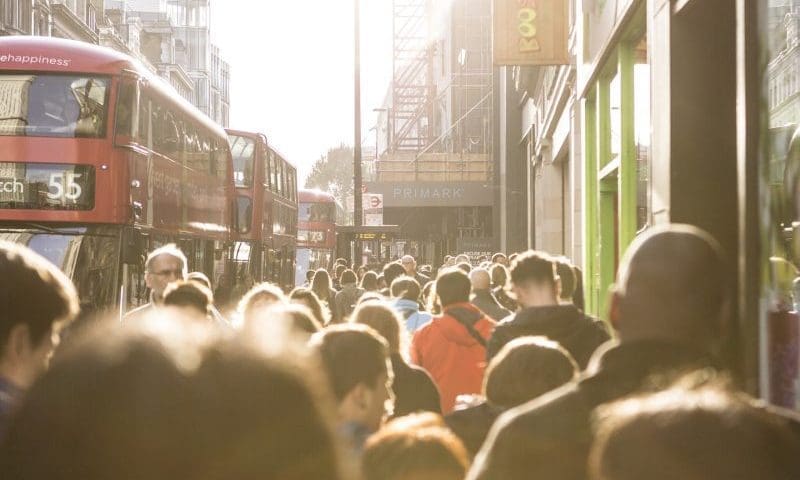
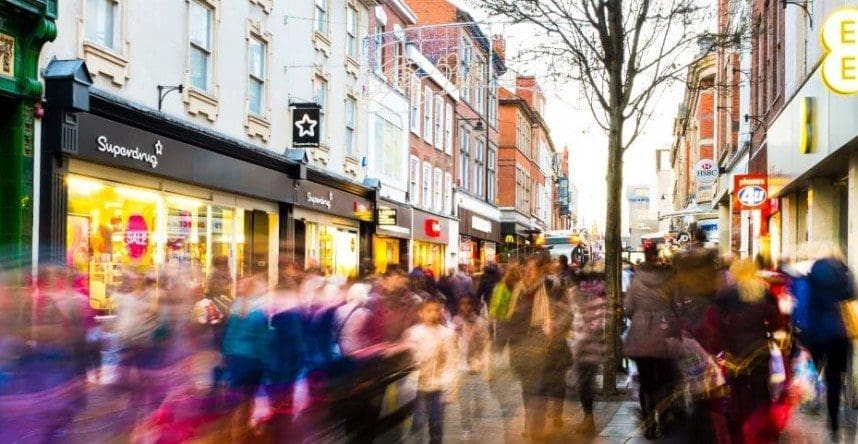
The physical retail environment in Q1 2026 was characterised by a distinct shift toward utility and leisure. While total UK footfall decreased by 0.6% in January, this was viewed as a sign of cautious optimism compared to the sharper declines seen in December.
However, the weather played a disruptive role. Storm Goretti suppressed visits to the high street during parts of the month, which saw a 1.9% decrease in footfall. In contrast, retail parks saw a 1.1% increase, buoyed by the convenience of free parking and the ability to fulfil multiple shopping needs in a single trip.
| Location Type | January 2026 Footfall (YoY) | Key Contributing Factors |
| Retail Parks | +1.1% | Free parking, sales promotions, multi-utility. |
| High Streets | -1.9% | Impact of Storm Goretti, travel disruption. |
| Shopping Centres | -0.8% | Recovery from 5.1% fall in December. |
The Co-op Group’s strategy for Q1 2026 provided a model for the future of the high street. The retailer confirmed it would open or relaunch 18 stores as “hubs,” integrating parcel collection services and specialised meal ranges with traditional grocery.
This strategy acknowledged that with 86% of the population able to access inventory via delivery apps, physical stores must function as community anchors to maintain relevance.
Conclusion: A sector in rationalised resurgence
The UK retail industry in Q1 2026 has emerged as a sector of high-contrast performance. The “State of the Industry” is one of extreme efficiency and technological urgency. Successful boosts in sales volumes for non-food items indicate a consumer appetite for quality, yet the rise in insolvencies serves as a reminder that structural pressures remain acute.
Strategic imperatives for the remainder of the year are clear: the adoption of agentic AI is essential for margin protection, and the physical store must continue its transition into a community “hub.” As the industry moves into Q2, those who have utilised investment incentives like the 40% tax allowance to upgrade their operations are best positioned to turn the cautious optimism of the winter months into sustained spring growth.