




Register to get free articles
Want unlimited access? View Plans
Already have an account? Sign in
Sainsbury’s welcomed a return to volume growth and strengthening market share outperformance in Q1, largely driven by a strong grocery momentum over the period, as the group noted that food inflation was starting to ease.
Over the quarter, like-for-like sales (excluding fuel) were up by 9.8%, while total retail sales (excluding fuel) rose by 9.2%. The group also reported a strong grocery performance, with sales rising 11%.
General merchandise sales were up by 4%, in part driven by further Argos market share gains, with Argos sales up by 5.1%. Strong consumer electronics sales helped offset a weaker performance in the early summer.
According to Sainsbury’s, the stronger sales growth was driven primarily by a return to volume growth, helped by a particularly strong performance over bank holidays and warmer weather towards the end of the quarter. Growth was also led by its convenience stores and supermarkets, as customers continued to return to stores.
The group added that its market share gains were driven by the further improvement of its value proposition, including the launch of Nectar Prices in April, and a continued investment in availability and service.
It comes as Sainsbury’s claimed that food inflation is starting to fall, and that it is now “fully committed” to passing on savings to its customers.
Following these results, the supermarket said its outlook remains unchanged, and it continues to expect FY23/24 underlying profit before tax to be between £640m and £700m, and to generate at least £500m of retail free cash flow.
Simon Roberts, CEO of Sainsburys, said: “We are putting all of our energy and focus into battling inflation so that customers get the very best prices when they shop with us, particularly now as household budgets are under more pressure than ever. Food inflation is starting to fall and we are fully committed to passing on savings to our customers.
“Since March, we have invested over £60m in lowering prices, leading on price cuts across more than 120 essentials like bread, butter, milk, pasta, chicken and toilet roll. Prices on our top 100 selling products are now lower than they were in March, against a market where prices have gone up.”
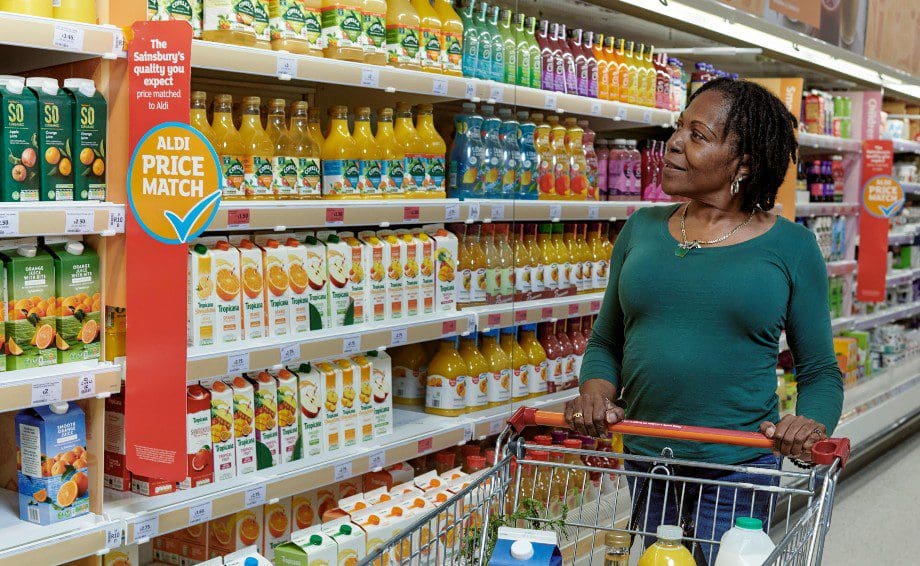
He added: “Customers have also saved over £90m since we launched Nectar Prices in April. In addition, we’re offering great value through Stamford Street, our entry price range and through our biggest ever Aldi Price Match campaign. All of this is underpinned by the continued delivery of our cost saving programmes.
“Customers can see that prices at Sainsbury’s have improved and this combination of great value and some good weather in recent weeks means we have grown our food volumes and market share. The progress we have made improving availability, value and convenience at Argos means we are well placed to deliver for customers in Argos’s 50th birthday year.”