




Popular now
Debenhams Group returns to growth amid PLT recovery

Debenhams Group returns to growth amid PLT recovery

Currys appoints Fredrik Tønnesen as Group CEO

Currys appoints Fredrik Tønnesen as Group CEO

Inditex sales rise 5.8% after strong start to summer trading

Inditex sales rise 5.8% after strong start to summer trading

Quiz administrators launch store-wide discounts

Quiz administrators launch store-wide discounts

The administrators confirmed that Quiz concessions operating within New Look and Matalan stores are not part of the administration process and continue to trade as normal

On this episode of Talking Shop I’m joined by Alain Bejjani—former Group CEO of Middle East retail giant Majid Al Futtaim, and author of the definitive new book, NEXT: Leading Through the New Realities. Drawing on his childhood in war-torn Beirut, and his experience steering a $9.5bn dollar retail and lifestyle empire through a global pandemic, Alain brings an unmatched perspective on leadership under pressure. Today, we break down his crisis survival playbook for retailers operating in distress. We discuss why resilience must always outpace efficiency, the four assets a brand must protect at all costs, and how to turn macro-turmoil into a long-term direction that scales.

Register to get free articles

No spam Unsubscribe anytime

Already have an account? Sign in

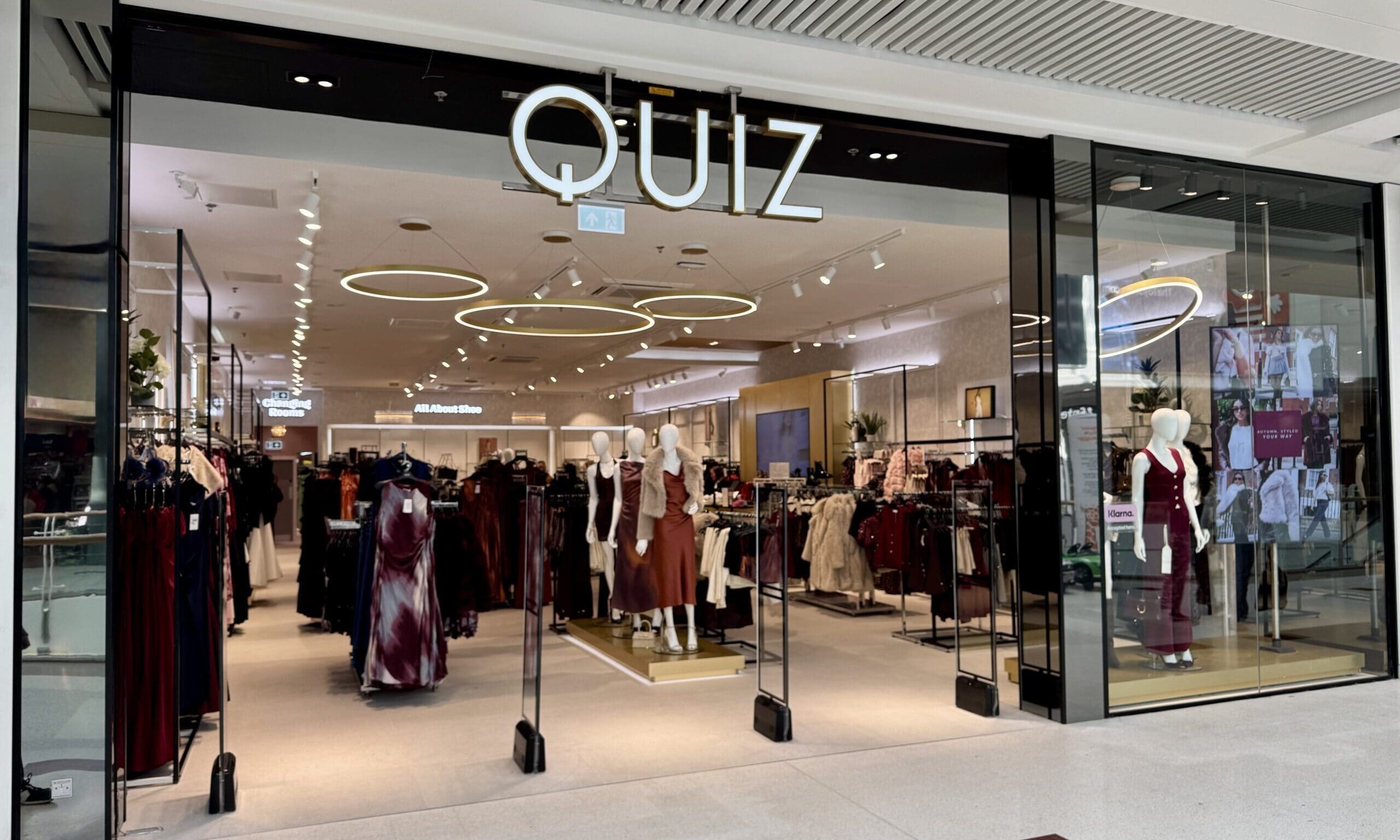
The joint administrators of the Quiz Clothing group have commenced additional clearance discounting across all remaining stock in its 40 UK stores. 

Alistair McAlinden and Geoff Jacobs of Interpath Advisory were appointed as joint administrators to the group’s trading entities, Orion Retail Limited, Tarak International Limited, and Zandra Systems Limited, on 5 February 2026.

While the group’s website closed immediately upon appointment, all 40 physical stores remain operational. 

The administrators confirmed that Quiz concessions operating within New Look and Matalan stores are not part of the administration process and continue to trade as normal.

The administration team is currently seeking parties interested in acquiring the company’s stock, store operations, and infrastructure.

Alistair McAlinden, head of Interpath in Scotland, said: “Since our appointment on 5 February, trading across the Quiz store portfolio has been extremely positive. We’d like to advise customers that all 40 stores remain open, and we will now be commencing additional clearance discounts across all remaining stock. We’d like to give our huge thanks to Quiz’s team of dedicated employees and its loyal customers for their tireless support.”

Geoff Jacobs, managing director at Interpath, added: “We also urge any remaining parties with an interest in acquiring the stock, store operations and infrastructure of Quiz to contact us as soon as possible.”


What’s gone wrong at Quiz?

On 5 February, Glasgow-based fashion retailer Quiz entered administration for the third time in just six years, leading to 109 redundancies, and its decision to shut down its website. Unlike its previous administrations, a rescue deal has yet to materialise. With a lack of interest from potential buyers, joint administrators have launched additional clearance discounting across all remaining stock in its 40 UK stores. 

The Ramzan family-owned company has been facing financial headwinds for quite some time. Founded in 1993, Quiz arguably hit its peak in 2017, launching a listing on the Alternative Stock Market (AIM) in July of that year which raised £100m. However, the pandemic forced it into administration for the first time only three years later in 2020. Met with recurring lockdowns, people suddenly had very little use for occasionwear pieces – the brand’s anchor products – turning them instead towards online-only retailers like Asos and Boohoo who specialise in discounted loungewear. As a result, revenue plummeted 10% on the year prior, with the company deciding to shut down 11 of its 82 stores before buying the business back out and renegotiating its leases with a number of landlords.

By March 2023, Quiz was on the way to recovery as its annual revenue climbed 17% to £91.7m. However, things took a turn for the worse in 2024, in which the brand reported a £5.2m pre-tax loss, with revenue falling 11% to £82m for the financial year ending 31 March 2024. CEO Sheraz Ramzan blamed the “challenging maco-economic conditions impacting many retailers” as the cost-of-living prices dented sales across the country.

In January 2025, Quiz delisted from the AIM, citing substantial cost, management time and legal and regulatory requirements for trading on the stock exchange as reasons for the move. At the time, the retailer also said it was “more appropriate and practical” to handle transformations in its cost base as a private limited company without announcement obligations and confidentiality limitations. Only a month later, it entered its second administration. 

Despite being bought back by Orion Retail, also owned by the Ramzan family, a year later the company now finds itself in a similar situation. It appears that over the past five years, Quiz has failed to adapt to the recurring challenging trading conditions that have affected all aspects of the wider sector. Why, then, has Quiz seemingly been harder hit than its competitors? 

While the brand says it targets 16 to 35-year-old “fashion forward females”, many young professional women continue to work-from-home post pandemic, meaning Quiz’s full or quarter length dresses could be seen to be outdated and out of style for today’s needs. Quiz also finds itself in an era of internet fashion trends that typically center around either nostalgia, whether it be for ‘y2k’ or 2016, or simplicity – a stark contrast to its traditional offering.

It remains to be seen whether Quiz will get another bailout, but with the latest statement from administrators that amid heavy discounting trading has been “extremely positive”, the embattled retailer could be seen to be a more attractive proposition than it was at the beginning of the month. However, any new owner will need to get to the bottom of the company’s inability to be resilient in the face of difficult trading conditions, and whether its current offerings can be adapted to meet the needs of today’s consumer.


Previous Post
Morrisons looks to offload in-store pharmacies as losses widen

Morrisons looks to offload in-store pharmacies as losses widen

Next Post
TUC calls on Bank of England to ‘go further’ with rates cuts

TUC calls on Bank of England to ‘go further’ with rates cuts