The Cotswold Company: when success spurs a sale
Despite double-digit growth and expanding showrooms, The Cotswold Company’s private equity owner True is preparing a potential sale. Industry experts unpack why strong performance can make a retailer ripe for exit, and what today’s investors are really buying.
Register to get 1 free article
Reveal the article below by registering for our email newsletter.
Want unlimited access? View Plans
Already have an account? Sign in
When a private equity firm begins preparing to sell a company performing at its peak, it can seem counterintuitive. Yet reports that True, the private equity owner of The Cotswold Company, has appointed Arrowpoint Advisory to explore a potential sale suggest a strategic play. It’s one that reveals as much about the broader retail and investment landscape as it does about the homewares brand itself.
True, which has owned The Cotswold Company since 2016, is working with the Rothschild-owned firm to draw up a long-term exit plan. A formal auction is not imminent, but a sale could occur within the next two years.
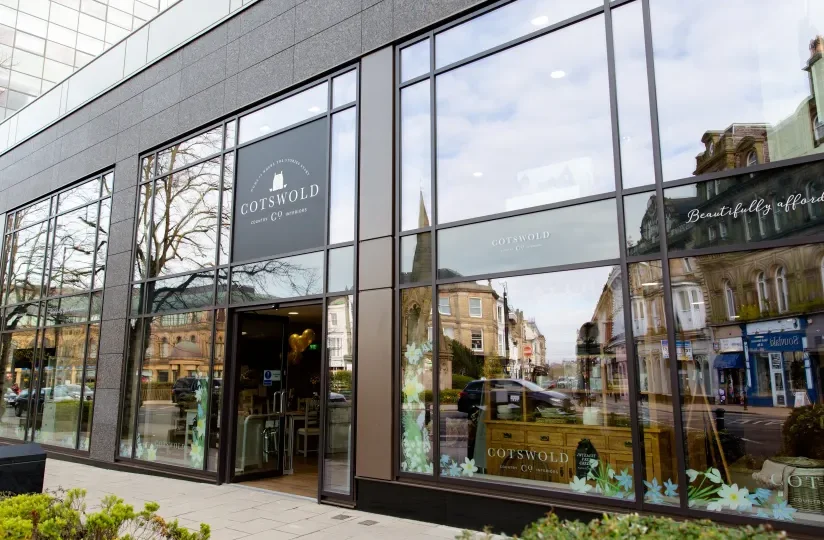
The decision comes after a notably strong trading period. The Cotswold Company reported a 30% increase in sales for the six months to 30 August. Growth was driven by improved brand momentum and digital operations. The business now serves more than 250,000 active customers and recently opened two new showrooms, alongside appointing television personality Will Kirk as its quality expert to underscore its craftsmanship credentials.
The company’s core proposition – “alternatives to soulless and low-quality furniture” – has resonated with consumers in search of authenticity, durability and warmth. But what does a move like this signal, and why now?
According to Chris Woodward, executive director at brand agency Oliver, True’s timing follows a familiar private equity rhythm but it also marks how far the brand has evolved.
“PE firm True first invested in The Cotswold Company nearly a decade ago,” Woodward explains. “The playbook that True has followed is conventional private equity – the management team has been overhauled, True’s portfolio team has added its expertise to deepen the capabilities across all aspects of The Cotswold Company, and capital has been readily available to invest in growth.”
What stands out, he says, is the duration of that partnership. “I am surprised that True has held onto its investment for so long. It has been particularly patient and committed to the journey it has been on with The Cotswold Company – something that private equity is not renowned for,” he notes.
That patience, however, may now be paying off and creating an optimal exit window. “I’m not surprised that True is selling now. The Cotswold Company’s valuation is strong, with 30% sales growth in the first six months of this year. Revenues are at £56.9m and profits have doubled. This is prime time to sell. And it’s made more attractive, and urgent, by the continued heavy tax burden on UK consumers that is expected to increase come Rachel Reeves’ second budget in November – with the knock-on effect that will have on consumer confidence and spending.”
Chris Spratling, entrepreneur, business coach and author of The Exit Roadmap, agrees that timing is everything in private equity. “True will have gone into The Cotswold Company with a clear plan and timeframe for realising value – and after a period of strong performance, it’s likely that business fundamentals, market sentiment, and investor appetite have all aligned,” he says. “Private equity exits aren’t about sentiment; they’re about strategy. When a portfolio brand like Cotswold Company has demonstrated scalability, strong margins, and digital maturity, that’s the sweet spot to crystallise returns and redeploy capital into the next growth opportunity.”
David Filmer, partner and head of corporate at Forbes Solicitors, agrees that True’s move aligns with a standard private equity cycle – but with a modern twist.
“The opportunity to sell would recycle capital into new opportunities, while ensuring continuity of The Cotswold Company and its business under ownership that maintains its heritage-driven growth trajectory, which combines product quality and strong customer service,” Filmer explains.
He also notes that exit strategies have evolved since the pandemic. “There has been a shift from more aggressive IPO pursuits and broad auctions to more targeted approaches that consider volatility in supply chains and consumer spending. In retail specifically, this evolution emphasises exits for ‘future-proofed’ businesses, such as The Cotswold Company, which combine physical heritage with e-commerce scalability.”
Spratling observes a similar shift from financial engineering toward operational resilience. “We’re seeing a marked change in PE behaviour post-pandemic,” he says. “The most successful funds now look for brands with robust D2C models, omnichannel reach, and a strong data spine – because those are the assets that can scale sustainably. PE owners have also become more disciplined about early exit planning – mapping value drivers and buyer personas right from day one. The best exits are engineered years in advance, not improvised when growth starts to flatten.”
Fred Dearden, director and head of private equity advisory at Forvis Mazars, adds that The Cotswold Company’s strength is especially notable in today’s cautious investment environment.
“Investor sentiment towards B2C consumer products remains wary, largely due to the close link to discretionary spending and the continued sensitivity of this to wider economic pressures,” Dearden says. “As a result private equity activity has been subdued in the sector, with lower deal volumes reflecting ongoing caution towards retail-focused assets.”
Martin Newman, an expert on consumer experience, also points to a continued strong demand for premium assets right now, particularly those with both online and offline reach that are brands with established loyalty and growth that outperform the wider market. “The Cotswold Company displays all of these characteristics,” he says, “and with strong trading performance and supportive market dynamics, it is unsurprising that sell-side advisers have been appointed for this quality asset.”
“For potential buyers, changing consumer habits and digital maturity have made many UK retail brands far more compelling,” he adds. “Businesses that have successfully blended online and offline experiences, invested in data, and built genuine customer loyalty are now far more resilient than they were five years ago. That makes them valuable assets in a market still full of uncertainty.”
Yet numbers alone don’t tell the full story. What investors are really buying is brand equity – the intangible mix of legacy, reputation, and emotional connection that turns a retailer into a long-term asset.
Vicky Bullen, CEO at global branding agency Coley Porter Bell, says The Cotswold Company “ticks all the boxes” for an attractive acquisition.
“In terms of an attractive brand, The Cotswold Company ticks all the boxes – a strong brand and product offering, good marketing activity and a robust omnichannel model,” she explains. “Then, factoring in the brand’s recent growth across both its overall sales and new stores, it has established itself as an extremely promising brand that holds a lot of potential for a prospective buyer.
“It is also breaking through in an extremely competitive market. Many furniture and homeware retailers have found their own place within the sector and are thriving as a result. The likes of IKEA, Dunelm, DFS and John Lewis have made it a tough industry to crack into, yet The Cotswold Company has found its niche as a company that values craft and making beautiful home furniture that lasts.”
Bullen adds that its brand legacy holds distinctive value. “Brand heritage, in particular, holds a significant amount of value as it’s something that money can’t buy. While sustainability and digital capabilities can be rolled out over several years and replicated by other competitors, The Cotswold Company’s 25 years of heritage and story of starting the business in the heart of the Cotswolds is inimitable because it’s their own unique history.”
Spratling agrees that the combination of heritage and modernisation is what makes the brand so investable. “Cotswold Company sits at the intersection of heritage and modernity – authentic British design with a digitally enabled customer experience,” he says. “That combination of brand equity, repeat revenue, and online capability makes it highly investable. Buyers are drawn to businesses that have both emotional resonance with consumers and the operational discipline to scale efficiently.”
That emotional and reputational capital translates directly into financial value, says Sally Shuttleworth, regional director at The Marketing Centre.
“When a business builds a strong reputation over time, supported by authentic storytelling and a genuine commitment to quality, it creates far more than a customer list,” Shuttleworth says. “Consistent delivery built on a clear sense of purpose builds trust, strengthens customer relationships, and sparks a deeper passion for the brand’s story.”
She explains that heritage and quality send clear signals to investors. “Heritage, when communicated well, suggests deep sound roots and gives an investor confidence that the brand has earned its place in the market and can maintain that ground. Quality indicates higher margin protection and valuable customer loyalty. As a combination, they tell a more compelling story than short-term performance metrics can on their own.”
Spratling also highlights that sustainability and digital capability are now inseparable from brand value. “Brand heritage builds trust; sustainability builds relevance; and digital capability builds scalability,” he says. “Increasingly, acquirers want all three. The market is rewarding retailers who can demonstrate measurable sustainability progress and use data to anticipate, not just react to, customer behaviour. That’s where value multiples rise sharply.”
The timing of True’s exploration of a sale coincides with strong consumer engagement in homewares, even amid economic uncertainty.
According to Kleen-Tex’s Homeware Buyers Index 2025, more than half of UK consumers plan to maintain or increase their spending on soft furnishings in the next 12 months.
“Consumers aren’t stepping back from investing in their homes even in tough times,” said Elaine Smith, European marketing director at Kleen-Tex Home. “That marks a clear shift in how people are choosing to spend, and where they see value.
“For retailers and brands, the message is clear: expectations are evolving fast. Once niche concerns – functionality, hygiene and sustainability – are now core to how people evaluate products and make purchasing decisions.”
The report also found that 55% of consumers prioritise quality and durability over trends, and 87% of retail buyers are seeing growing demand for washable and long-lasting products. These trends align closely with The Cotswold Company’s “crafted for life” positioning.
Between steady consumer appetite, brand strength and an increasingly selective investor landscape, The Cotswold Company’s situation reflects a wider truth about the 2025 retail environment: the best time to sell may be when the business looks most resilient.
Private equity firms like True are under pressure to demonstrate returns amid volatile markets and political uncertainty. For a brand that has successfully scaled, modernised and deepened its market position, the combination of strong numbers, shifting consumer sentiment and a still-active M&A environment creates a rare window of opportunity.
Spratling says this could signal a more confident phase for UK retail investment. “If this sale proceeds at the kind of multiples being suggested, it’s a clear sign that confidence is returning to the UK retail and consumer investment landscape,” he says. “Investors are differentiating between overexposed, discount-led retailers and premium lifestyle brands with authentic customer relationships. Cotswold Company’s potential sale says a lot about the appetite for well-run, digitally mature British brands – it’s not that money has left the market; it’s that investors are being more selective about where they place it.”
For True, this isn’t an exit from weakness but a culmination of strength – a disciplined endgame that turns patience and brand equity into value. The Cotswold Company’s story shows that in today’s retail landscape, the smartest sales are made not in recovery, but at the height of success.