Popular now
Strong December retail sales fail to offset weak Q4

Strong December retail sales fail to offset weak Q4

Next acquires Russell and Bromley

Next acquires Russell and Bromley

Primark sales fall 2.7% despite steady parent group revenues

Primark sales fall 2.7% despite steady parent group revenues

Sainsbury’s cuts plastic waste by almost 700 tonnes

Sainsbury’s cuts plastic waste by almost 700 tonnes

On the final episode of season three we sit down with Claire Watkin, CEO of The Fine Bedding Company, a fourth-generation business founded in 1912. She shares how the brand has performed in recent years and what its proposition really stands for today. We explore balancing heritage with innovation, building sustainability into products and operations, and the journey to a zero-waste eco-factory in Estonia. Claire also unpacks earning consumer trust, making the investment case, and her advice to the next generation of leaders.

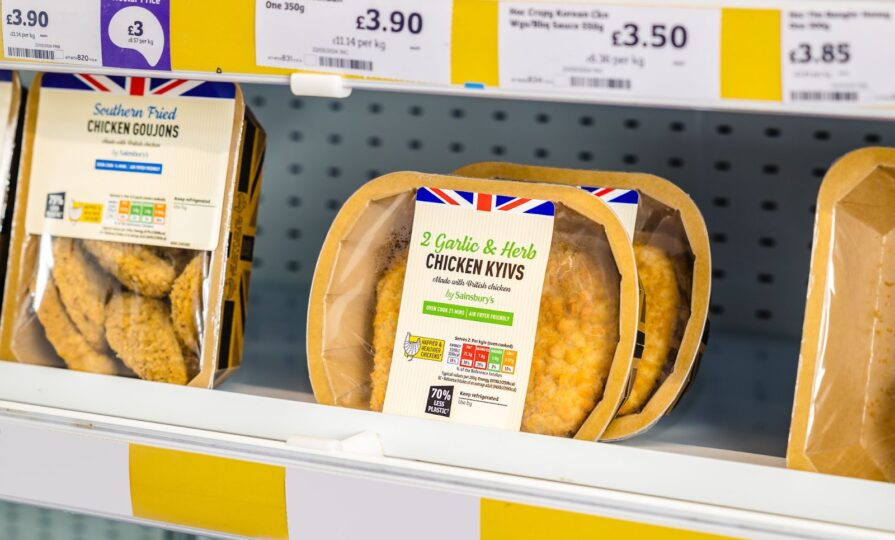
Sainsbury’s is set to save 694 tonnes of plastic a year thanks to the introduction of a number of packaging changes across its own-brand chicken and fish lines. 

All own-brand salmon fillet trays are switching to pulp cardboard instead of plastic, a UK retailer first, which will result in 70% less plastic, saving 346 tonnes of plastic a year. The pulp trays are made from sugarcane pulp, and are lined with polyethylene film. 

Alongside this, Sainsbury’s is rolling out cardboard trays across its ‘Taste the Difference’ and ‘by Sainsbury’s’ breaded chicken lines, set to save 300 tonnes of plastic a year. The retailer is also making the same changes to its ‘Taste the Difference’ breaded fish fillets, set to save 48 tonnes of plastic a year.

The new packaging will be rolling out throughout the summer across many seasonal chicken products, including Sainsbury’s finger food and BBQ range. The more sustainably packaged range will offer breaded goujons, nuggets, schnitzels and more.  

The pulp cardboard trays from all salmon lines and cardboard trays across breaded chicken and fish are easily recyclable, helping customers to reduce their household waste by placing the packaging in kerbside recycling at home.

The announcements are the latest in a string of changes made by the retailer as part of its commitment to reduce its own-brand plastic packaging, such as the by Sainsbury’s plastic steak trays being replaced with cardboard alternatives. 

Additionally, Sainsbury’s recently made its greatest standalone plastics removal, by swapping plastic punnets for cardboard for all its own brand mushrooms, saving over 775 tonnes of plastic a year.

Claire Hughes, director of product and innovation at Sainsbury’s, said: “With salmon being one of our most popular fish, we made it a priority to reduce the plastic on the packaging of this much loved product as we work towards our Plan for Better goals.

“We are now the first retailer to make the move to have recycled pulp card trays across all our bySainsbury’s and Taste the Difference salmon products, enabling a whopping 70% plastic reduction. Together with changes to our breaded fish and chicken packaging, we are set to save 694 tonnes of plastic a year – a significant step towards our plastic reduction goals.”

Previous Post
White Stuff to launch wholesale arm in the US

White Stuff to launch wholesale arm in the US

Next Post
One in three Asda staff attacked at work, GMB finds

One in three Asda staff attacked at work, GMB finds

Secret Link