



Register to get free articles
Want unlimited access? View Plans
Already have an account? Sign in
There will reportedly be a significant impact on footfall in UK retail destinations following the government’s announcement regarding Plan B, which includes guidance to work from home, according to retail experts Springboard.
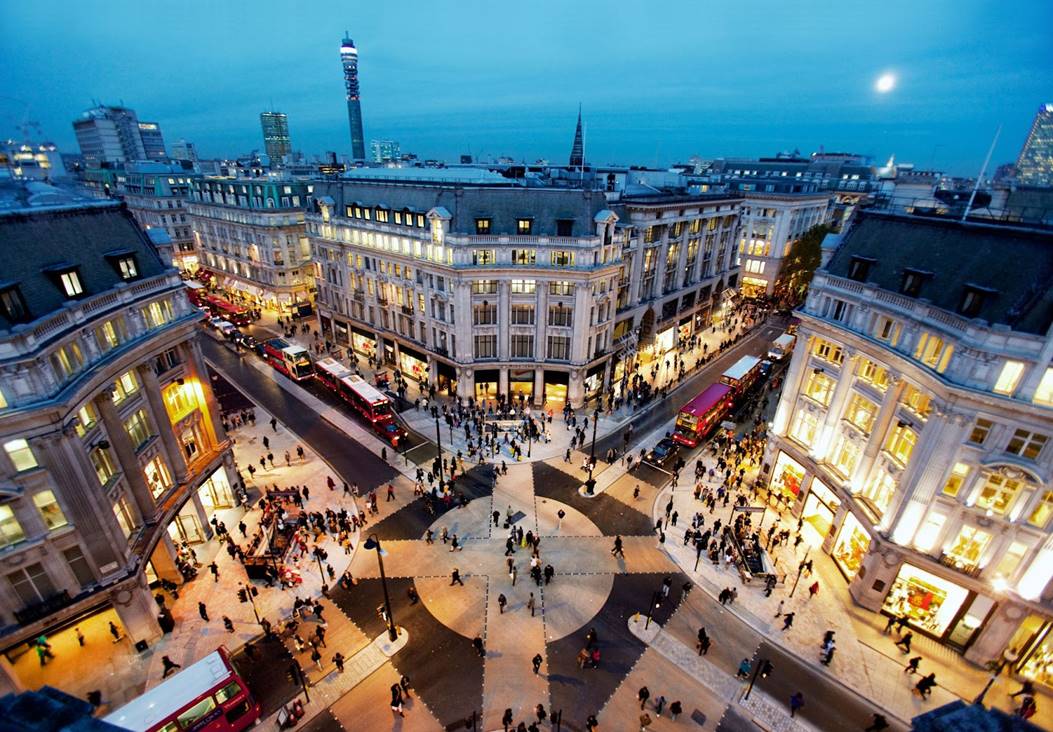
According to Springboard, in Central London and city centres outside of the capital, footfall is currently -20% below the 2019 level, with the gap in footfall from 2019 in Central London narrowing from -58% in May, and from -34% in large cities outside of the capital.
Springboard predicts a widening of this gap, with a footfall dropping to -50% below the 2019 level in Central London and -30% below 2019 in cities outside of the capital.
It also predicts in retail parks – where footfall is just -4% below the 2019 level – footfall could strengthen to -2% below the 2019 level due to drop in shopper activity in city centres.
It predicts in outer London footfall will shift from its current level of -10% below 2019 to -15%, in market towns footfall will shift to -19% below 2019 from its current level of -16% and in shopping centres to -28% from its current level of -22%.
Springboard also predicts to see a sudden rise in online non-food spending again, to circa 29%.
The percentage of non-food spending that is online currently stands at 22% (10% for food spending) and in December last year when, restrictions were also in place (albeit more severe than those under the current Plan B), online spending on non-food stood at 30% (still 10% for non-food spending).
Diane Wehrle, insights director at Springboard, said: “From our knowledge of previous periods of Covid restrictions we know that enforced home working and increased nervousness around Covid means a proportion of this footfall will be diverted elsewhere, predominantly to smaller high streets that are more local to shoppers’ homes and are less congested, and to retail parks, many of which have a wide range of high street retail stores that are large and spacious, combined with open air parking that is free of charge.
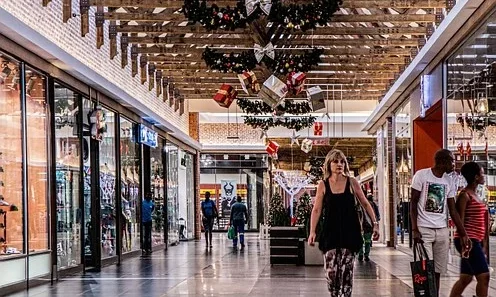
“The majority also include large food stores that are so key in the run up to Christmas. Some shoppers are also likely to transfer their city based trips to large shopping centres which deliver a Christmas experience but where the stores are large and the malls are wide, enabling them to socially distance more easily.”
She added: “This clearly represents yet another hammer blow to an industry that is still trying to recover from a huge loss of trade in 2020. Whilst many retailers benefited from a huge uplift in their online sales last year, for the vast majority this was simply not enough to make up for the loss of store sales; after all, in normal trading conditions pre Covid in 2019, 80% of retail sales were store based. Perhaps the saving grace for many will have been the awareness and concern of many.”