





Register to get free articles
Want unlimited access? View Plans
Already have an account? Sign in
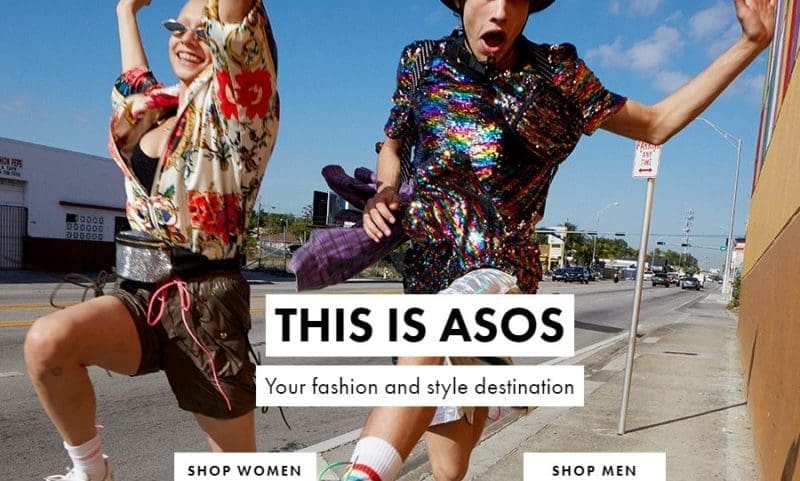
Back in July last year Retail Sector reported that Asos was having problems. It had issued a profit warning, suggesting profits were likely to be about one-third of what was originally anticipated. It was an interesting moment in the retail world, because the narrative for the whole of the last decade was that bricks-and-mortar outfits were under assault from all sides, but the online challengers were living it up.
To see one of the most successful online-only brands taking a hit didn’t change the narrative, but it did provide reassurance to traditional retailers that perhaps it wasn’t just them. This impression was augmented by reports that October online retail growth had slowed to its lowest rate on record.
But Asos seems to have turned things around, reporting today that Black Friday was the main driver of sales growth in its final four months of accounts. Sales grew 20% to £1.1 billion for the period, significantly faster than the 13% growth it recorded in the same period the previous four months. It’s a remarkable return to form, given there were actually two other profit warnings last year, driven by what the firm said was its “underestimation” of the extent to which rivals were discounting during the Christmas period of 2018.
The chief exec Nick Beighton said the good results could be chalked up to a wider range of products, higher availability of stock, superior presentation of offers and an increased presence on social media channels – seen by most new-generation retail businesses as one of the key routes to market.
He said: “The actions we took to rebuild customer momentum during the peak trading period delivered a better than expected sales performance largely driven by Black Friday weekend.”
The turnaround has come at a cost though: Asos has invested at scale in its logistics and digital infrastructure, but it seems to be paying off nicely.
The Jeff Bezos intimate WhatsApp story gets weirder and weirder
OK, so this story is way too long and convoluted for me to try to reproduce in a morning blog here. But it is worth reading, so I would recommend reading The Guardian’s coverage of it – it is they who broke the most recent iteration of the story.
In short, it involves the world’s richest man, the Washington Post, an angry president, sexting, the Kingdom of Saudi Arabia, and a murdered journalist. A more fantastical precis for a screenplay I don’t think it would be possible to produce.
The reason I am raising it in my blog today without going into detail is just to fill you in on the very latest development, which is that the UN rapporteur thinks the United States should investigate Saudi Arabia for its role in the story.
The recommendation concerns a very specific piece of the story, which is that the way some potentially embarrassing information about Jeff Bezos, the founder and chief executive of Amazon, came to light appears to be because the crown prince of Saudi Arabia personally sent him an infected video file on WhatsApp which then hacked his phone and infiltrated a load of private information.
I will leave it there, suitably vague, whetting appetites to go and read more. Actually, I will chuck in one more juicy bit: here was Bezos’ public blogpost a little earlier in the story explaining to the world that he was being blackmailed. As scoops about business people go, it doesn’t get much better than this.