




Register to get free articles
Want unlimited access? View Plans
Already have an account? Sign in
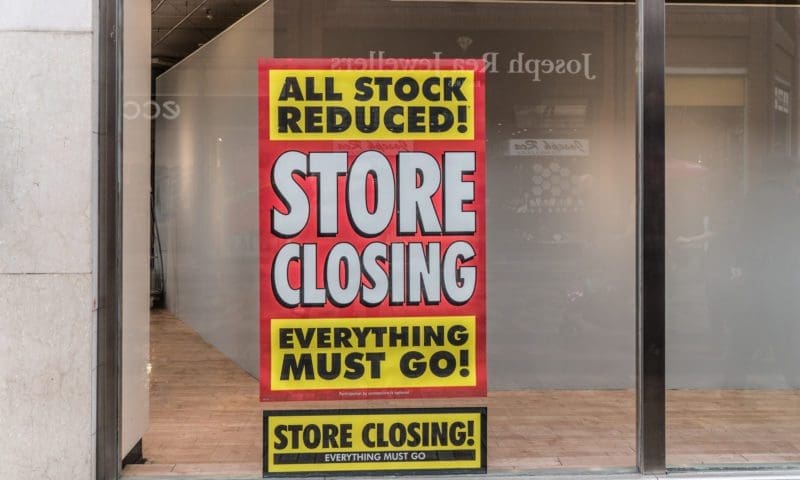
A new report from the Centre for Retail Research (CRR) has predicted that 2018 will be the worst year on record for store closures, with more than 10,000 outlets disappearing from the high street.
The ‘Retail At Bay 2018’ study also argues that the developing crisis in the retail sector will permanently damage the high street unless rapid government or local council action is taken.
This follows a previous report by director and professor Joshua Bramfield, which was released in May 2013 and predicted that one in five retail stores would close in 2018. Since 2012, CRR estimated that 60,932 stores closed (a fall of -15.7%) to the end of 2017 and by the end of 2018 the figure will be 71,602 (-18.4%).
The report also suggested that online growth will continue and attributed the failure of brick-and-mortar retailers to that growth.
In 2008, the online share of the retail market was only 7.7%, but more than doubled to 17.8% in 2018, worth £66.7bn. Since 2012, the sales increases made by traditional retailers only increased volumes by +0.5% compared to +87.7% growth by online retailers.
It was predicted that this year, almost a quarter (24.6%) of non-food sales (clothing, electricals, leisure, music and household) will be made by online sellers.
The report does not see rapid online growth as continuing forever, but said there are monopoly implications, currently unexamined by the Competition and Markets Authority (CMA), of a company like Amazon controlling 25% or more of the UK retail market.
The business rates system was also blamed for the predicament of bricks-and-mortar retailers as in 2018-19 they will pay £7.16bn in business rates to HMRC, which accounts for 2.3% of their total sales. The online sector (with 17.8% of total retail) will pay £4.57bn equivalent to 0.6% of online sales.
The report also predicted that the high street would become more leisure and entertainment focused with more space allocated to restaurants, coffee shops, artisanal food, health and beauty, dance, wellness and fitness needs.