






Register to get free articles
Want unlimited access? View Plans
Already have an account? Sign in
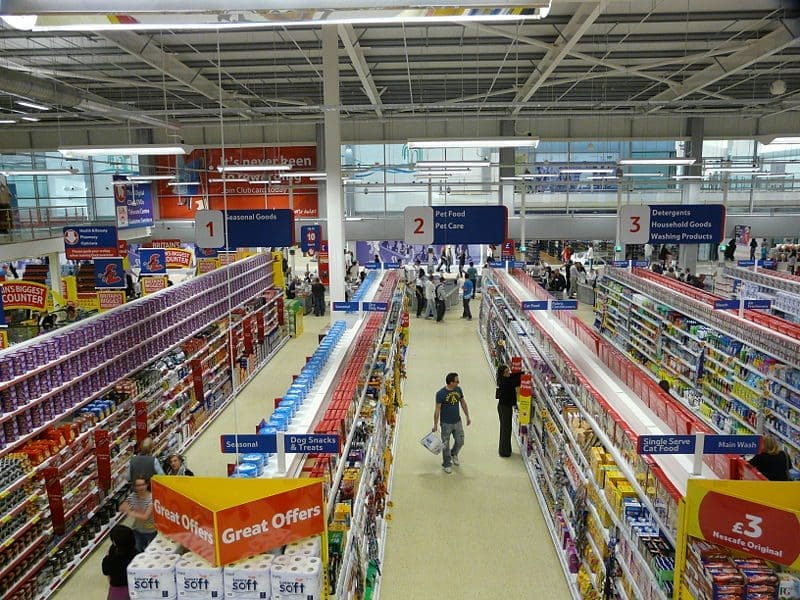
Food sales continue to drive up sales in the retail sector, but non-food retailers suffered a fall in spending.
Over three months to February in-store sales of non-food items declined by 2.4% on a total basis, and 3.3% on a like-for-like basis, according to figures released today by the British Retail Consortium (BRC) and KPMG.
However, food sales increased 2.8% on a like-for-like basis and 4.0% on a total basis.
Online sales continue to strive though as sales of non-food products grew 6.4% in February, against a growth of 8.0% in February 2017.
Helen Dickinson OBE, chief executive, British Retail Consortium said: “The headwinds to retail spending continued to blow strong in February. Inflation is still eating into shoppers’ budgets, pushing them to spend a greater share of their income on essentials and leaving less left over to buy discretionary, predominantly non-food, retail items. At the same time, weak growth in household earnings is keeping overall sales low.
“There’s little sign that consumer confidence, rather than financial reality, has much to do with the current weakness in spending. Furniture, often considered the bell weather of consumer confidence, actually saw sales improve in February as shoppers took advantage of credit facilities offered by retailers. The fact is that consumers want to spend, they just don’t have the resources to do so.
“With the upward pressure on prices from the fall in the pound now starting to subside we expect to see some loosening of the squeeze on spending on non-essentials, but it’s likely to come slowly. And so are anticipated increases in wage growth. Crucial for consumers and retailers over the coming months will be a successful outcome to trade negotiations, ensuring that amidst the current difficulties, they won’t be facing further increases in costs from new tariffs on the everyday goods we import from the EU.”
Paul Martin, head of retail, KPMG added: “Retailers experiencing any growth in this environment will be counting themselves lucky. Indeed, total growth of 1.6% in February is quite an achievement in such testing times. Softening consumer demand, rising costs for retailers and of course the ongoing structural changes within the industry, are creating the perfect storm which is uprooting the weakest players.
“On the high street, it was grocery sales that continued to pull it out of the bag. Meanwhile, Shrove Tuesday may have resulted in an uptick in cooking accessory sales, but performance in non-food in general was once again disappointing.
“Online retail appeared to have fared better – with growth across all categories – but the latest figures reinforce an underlying trend of a slow-down in growth online, which prompts concern.
“The retail shakeout will gather further momentum in the coming months, and retailers with large physical store estates are particularly under pressure. Moreover, the cost of one of the coldest winters on record has yet to be factored in. It’s not all doom and gloom though, a number of retailers are bucking the overall trend by focussing on a differentiated proposition whilst remaining relevant to the customer.”