







Register to get free articles
Want unlimited access? View Plans
Already have an account? Sign in
Estée Lauder’s decision to sue Jo Malone, her new brand Jo Loves and Zara UK has unearthed an old topic of conversation: what happens when personal identity, trademark ownership and retail collaboration collide long after a founder has exited the business that made their name valuable?
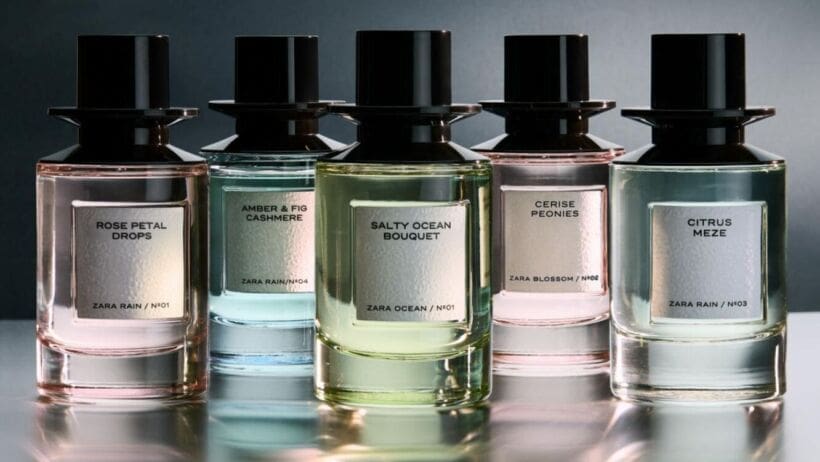
Filed in the UK High Court on Thursday 12 March, Estée Lauder’s claim alleges breach of contract, trademark infringement and passing off over the use of Malone’s name in a Jo Loves collaboration with Zara. At the centre of the dispute is fragrance packaging bearing the phrase “A creation by Jo Malone CBE, founder of Jo Loves”.
The significance for retailers lies in the way the case brings together three commercial realities: the value of founder-led brands, particularly in beauty, where authorship and authenticity are central to consumer appeal; the long tail of acquisition agreements, which can continue to shape what founders are permitted to do years after a sale; and the role of collaborations as a route to scale and visibility.
Zara’s involvement turns what might otherwise have remained a niche legal disagreement into a wider warning for retailers, investors and brand owners about the risks embedded in founder identity.
When a founder’s name stops being their own
The timeline helps explain why the dispute has become so pointed. Malone sold her eponymous business to Estée Lauder in 1999, reportedly including rights in the Jo Malone name for commercial use in fragrance and beauty. She stepped down as creative director in 2006 and then served a five-year non-compete period. When that expired in 2011, she returned to the market with Jo Loves, a separate brand that allowed her to resume perfumery without reviving Jo Malone as a trading identity. However, from Estée Lauder’s perspective, the Zara collaboration appears to have crossed the line between a lawful new venture and an unlawful commercial use of a name it says it owns.
That distinction matters, according to legal experts, because when an eponymous brand is sold, the transaction can involve far more than a company or a product range. It can also involve the commercial value attached to a founder’s personal identity. In beauty especially, a founder’s name can signify taste, expertise and trust. Those qualities are part of what an acquirer is buying. The difficulty comes later, when the founder remains publicly associated with the category but no longer controls the commercial use of the name that carries that recognition.
Maria-Christina Peyman, partner and head of the intellectual property team at Birketts LLP, places the case in exactly that context. She explains: “Back in 1999, Jo Malone sold her brand to Estée Lauder. There was clearly an agreement as to a form of her name which Jo Malone was able to use as she established ‘Jo Loves’ in 2011, which has been building as a brand since. However, Jo Malone’s latest venture with Zara appears to have departed from what was contractually agreed, at least, from Estée Lauder’s perspective.”
The wording on the Zara products is therefore crucial. “A creation by Jo Malone CBE, founder of Jo Loves” appears designed to sit between biography and branding. It identifies Malone as a real person using her legal name and title, while linking her to Jo Loves rather than to Jo Malone London. But that may be exactly why it has drawn scrutiny. The question is whether the wording is a neutral statement of authorship or a commercial use of the Jo Malone name to sell fragrance.
Peyman points to the limits of the ‘own name’ defence in this setting. “While there is an own name defence, under the UK Trade Marks Act 1994 (section 11(2)(a)), when one has agreed to transfer the rights to an eponymous brand then this defence is no longer available,” she adds. In other words, the founder remains the same person, but their freedom to use that identity in business can be heavily restricted once those rights have been assigned away.
Why the Zara collaboration raised the stakes
While a smaller-scale launch under Jo Loves alone might still have prompted scrutiny, Zara’s involvement brings mass visibility and broad distribution. That increases the significance of any contested wording. Legal experts suggest that, for Estée Lauder, the concern is likely not just that Malone’s name has been used, but that it has been used at scale in a retail setting where consumers may connect it with the founder of the much better-known Jo Malone London brand.
“Successfully enforcing such rights beyond the core area of fame is challenging.” – Roger Lush, trademarks partner at Carpmaels & Ransford
Collaborations are usually judged by brand fit, consumer appeal and commercial upside. On the other hand, founder-led deals require another level of diligence. This legal case is likely to prove interesting to retailers, who also need to understand who owns the founder story, who controls the personal name, and whether historic restrictions might be triggered by packaging, campaign copy or product attribution.
What retailers should learn from the dispute
Peyman says the case should be read as a warning for founders and partners alike. She urges eponymous name brands to consider: “When starting up, is using your own name really the best option, particularly if you may consider early exit from the business? If your eponymous brand is already established, carefully consider the terms of any deal and any limitations on own name use, how will this affect your future ventures? If you post the commercial agreement and there is already a contract in place, check how your proposed use of your name might be interpreted and whether that could cause a potential breach of contract.”
The wider industry context suggests this is not a one-off problem. Bobbi Brown later launched Jones Road after also selling her namesake brand to Estée Lauder. Kate Spade reportedly changed her legal name to Kate Valentine before later launching Frances Valentine. Peyman points to Karen Millen as another example of litigation involving an eponymous brand owner’s later use of her own name. As a whole, these cases suggest that eponymous brands can be highly valuable assets on the way up, but highly restrictive ones on the way out.
Roger Lush, trademarks partner at Carpmaels & Ransford, adds broader legal context. “Whilst famous names are very powerful IP rights, especially when registered as trade marks. The KATY/KATIE PERRY decision shows that the mere fact of being a celebrity does not necessarily entitle you to a complete monopoly over your name or similar names for all products or services,” he points out. “Successfully enforcing such rights beyond the core area of fame is challenging because of the heavy evidential burden and highly fact-specific nature of such cases.”
That matters here because Jo Malone’s case does not appear to turn on fame alone. It is shaped by the contractual history behind the name. The issue is not whether she is Jo Malone in life, but whether she can use that name in a mass-market fragrance collaboration after having sold those rights commercially. Estée Lauder’s claim appears to rest on the idea that the wording on the Zara products is not incidental but rather promotional and commercially meaningful.
“When one has agreed to transfer the rights to an eponymous brand then this defence is no longer available.” – Maria-Christina Peyman, partner and head of the intellectual property team at Birketts LLP
Experts suggest this is the deeper takeaway for retailers: founder identity remains one of the most powerful assets in beauty and fashion because it signals authenticity, origin and emotional connection. But once that identity has been formalised into contract and transferred in a sale, every later attempt to reactivate it can become contested ground.
Estée Lauder’s action against Jo Malone, Jo Loves and Zara is a reminder that in eponymous branding, authenticity may help sell the product, but ownership decides who gets to use it.