



Register to get free articles
Want unlimited access? View Plans
Already have an account? Sign in
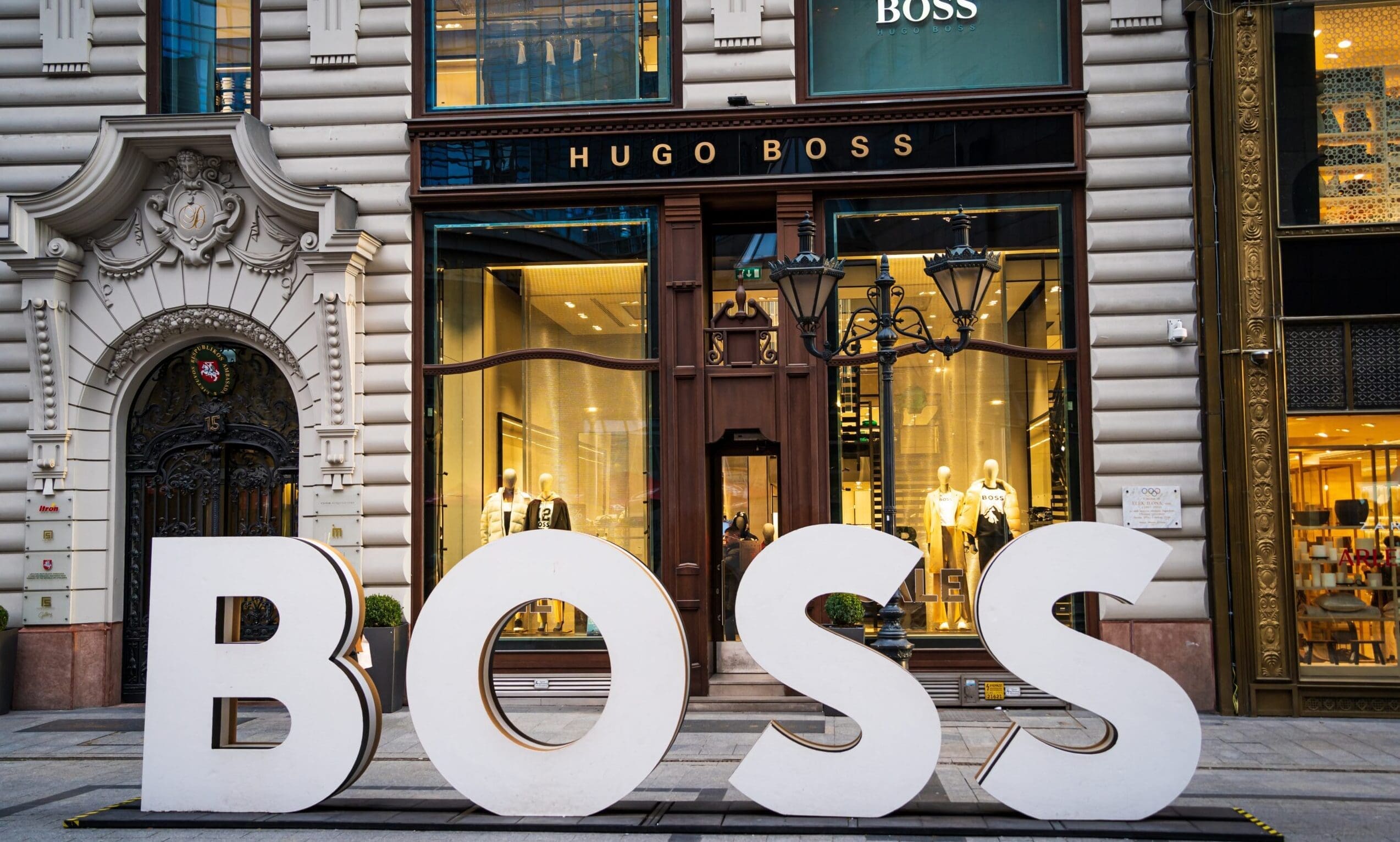
Hugo Boss has reported a 1% decline in group sales on a currency-adjusted and 4% on a reported basis to €989m (£871.3m) for the third quarter, citing challenging market conditions and continued currency pressures.
Currency-adjusted sales in Europe, the Middle East and Africa (EMEA) declined 2% to €641m (£564.7m), as growth in Germany and France was offset by a slowdown in the UK.
The group said subdued consumer sentiment and persistent macroeconomic headwinds continued to weigh on global demand, particularly in the UK and China. In Asia-Pacific, currency-adjusted sales fell 4% to €101m (£89m).
Sales in the Americas rose 3% on a currency-adjusted basis, supported by modest improvement in the US and strong growth in Latin America. Digital revenue increased 2% to €201m (£177m), while retail sales were broadly flat. Wholesale sales declined 5% to €281m (£247.5m), which the company said reflected the timing of deliveries.
Revenue from Boss Menswear remained stable at €76m (£67m), while Boss Womenswear fell 9% to €67m (£59m) and Hugo dropped 5% to €158m (£139.2).
Hugo Boss stated that the launch of its autumn/winter collections and the Boss spring/summer 2026 fashion show helped reinforce brand relevance despite the weaker trading backdrop.
Gross margin improved by 100 basis points, driven by sourcing efficiencies and lower freight costs. Operating profit (EBIT) was broadly unchanged at €95m (£83.7m), with an EBIT margin of 9.6%. Operating expenses were down 3% due to ongoing cost controls.
The company reaffirmed its outlook for the full year, forecasting 2025 sales and earnings to come in at the lower end of guidance ranges because of continued market volatility and exchange rate movements.
It expects full-year group sales between €4.2bn (£3.70bn) and €4.4bn (£3.88bn), and operating profit between €380m (£334.7m) and €440m (£387.6m).
Daniel Grieder, chief executive, said: Despite ongoing global market volatility in Q3, we remained focused on our strategic priorities, emphasizing long-term brand strength over short-term gains. Key highlights, including the Boss fashion show in Milan and the second Beckham x Boss collection, further elevated our global brand relevance and supported top-line performance.
“At the same time, we achieved meaningful efficiency gains, delivering notable gross margin expansion and streamlined expenses. This is clear evidence of the operational excellence and resilience at the core of our business model.”