

Register to get 1 free article
Reveal the article below by registering for our email newsletter.
Want unlimited access? View Plans
Already have an account? Sign in
Greggs has reported “good” like-for-like sales growth over the Q3 ended 28 September, as total sales rose 10.6% and like-for-like sales in company-managed shops rose by 5% against the same period last year.
According to the high street bakery chain, September proved to be the strongest month of the quarter, having launched its autumn menu that includes pumpkin spice doughnuts and lattes.
The group attributed its performance during the quarter to its menu development and further progress in extended trading hours, as well as new digital channels.
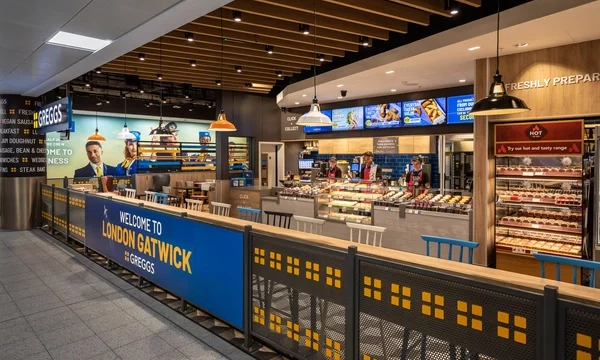
In the year to date, Greggs has opened a total of 152 new shops and closed 66, of which 43 were relocations. This left the group with 2,559 shops trading as of 28 September.
Openings in Q3 included two drive-thrus in Bristol, at Abbeywood Retail Park and Harlequin Business Park.
For the year as a whole, Greggs said it expects 140 to 160 net shop openings, including around 50 relocations and 55 net openings with franchise partners.
In line with its strategic plan, Greggs’ shop opening programme is improving the quality of the estate, as well as extending its reach.
With increased forward buying cover, the group now expects the overall level of cost inflation for 2024 to be towards the lower end of the 4-5% range previously communicated.
As a result, the group expects its full year guidance for capital expenditure in 2024 to remain in the range of £250m to £280m, which is in line with its previous expectations.