
Popular now
Freemans defies high street slump with sixth year of festive growth

Freemans defies high street slump with sixth year of festive growth

Waitrose secures Surrey site with shopping centre acquisition

Waitrose secures Surrey site with shopping centre acquisition

WHSmith opens three new sites at Manchester and Liverpool airports

WHSmith opens three new sites at Manchester and Liverpool airports

Food price inflation falls to 15.4% in May

Food price inflation falls to 15.4% in May

In this episode we speak to Matt Dalton, consumer sector leader at Forvis Mazars. Matt discussed the biggest challenges facing the retail sector, from cost pressures and wage increases to polarised property markets and geopolitical shocks, and the ways in which retailers can best navigate these. We also explore how short-term cost-cutting could undermine long-term resilience, and how retailers can best remain agile and adaptable in unforecastable times.

Register to get 5 free articles

Reveal the article below by registering for our email newsletter.

No spam Unsubscribe anytime

Want unlimited access? View Plans

Already have an account? Sign in

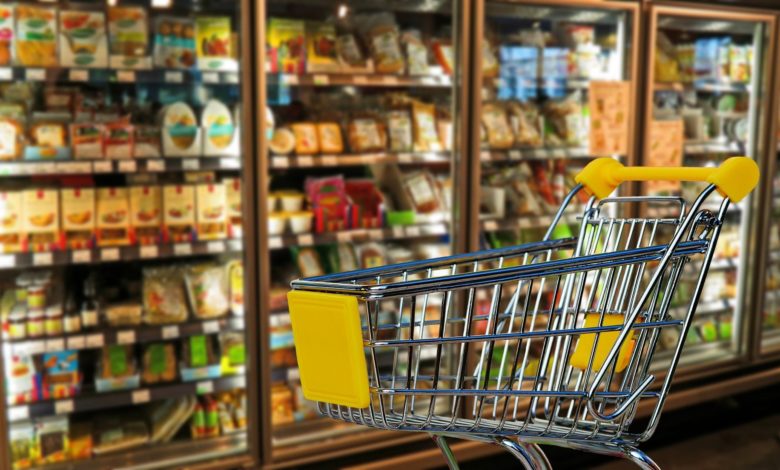
The British Retail Consortium (BRC) has revealed that food inflation has decreased for the first time this year to 15.4% in May, down from 15.7% in April.

Fresh food inflation also decreased in May to 17.2%, down from 17.8% in April. This is below the 3-month average rate of 17.3%.

However, the BRC revealed that shop price annual inflation is still at an all-time high, hitting 9% in May, up slightly from 8.8% in April.

Non-food inflation accelerated to 5.8% in May, up from 5.5% in Apri –  above the 3-month average rate of 5.7%

Helen Dickinson, OBE, chief executive of the British Retail Consortium, said: “The slow down in inflation was largely driven by lower energy and commodity costs starting to filter through to lower prices of some staples including butter, milk, fruit and fish. Conversely, the price of chocolate and coffee rose off the back of the ongoing high global costs for these commodities.

“Fierce competition between supermarkets has helped keep British food among the cheapest of the large European economies. While there is reason to believe that food inflation might be peaking, it is vital that the government does not hamper this early progress by piling more costs onto retailers and forcing up the cost of goods even further. The biggest risk comes from policies such as the incoming border checks and reforms to packaging recycling fees.”

Mike Watkins, head of retailer and business insight, NielsenIQ, said: “To help mitigate the impact of inflation, shoppers are saving money by looking for seasonal promotions on the high street and taking advantage of the price reductions offered by supermarket loyalty schemes. Food retailing in particular is competitive, so hopefully the recent price cuts in fresh foods is a sign that inflation has now peaked, albeit ambient inflation may take a little while longer to slow.”

Previous Post
Asda acquires EG Group UK for £2.27bn

Asda acquires EG Group UK for £2.27bn

Next Post
Sunak considering plans to ask retailers to cap price of basic food items

Sunak considering plans to ask retailers to cap price of basic food items

Secret Link