






Register to get free articles
Want unlimited access? View Plans
Already have an account? Sign in
While the beginning of lockdown was marked by empty shelves, panic-buying and a lack of delivery slots – have we now adapted to the new way of shopping for groceries?
There’s no doubt that shopping is a very different experience from a couple of months ago; a life before socially distant queues, face masks, plastic screens now seems like a world away.
At the end of March we looked at how supermarket usage had begun to change and found that both spend and frequency of shopping had increased. Local stores had also seen an increase in custom as people struggled to buy essentials such as pasta and eggs in the main supermarkets. Not to mention the growing demand for home baking ingredients such as flour.
Using BrandVue Retail we revisited the supermarket data to see how the land lies as lockdown becomes a more familiar reality.
Frequency of shopping trips has stabilised…
After a huge surge in frequency of online shopping in early March, these levels dropped as people made their way through their full cupboards or struggled to get a delivery slot. We also made fewer in-person visits to the shops at this time.
However, this has now stabilised to pre-lockdown levels as people get into a routine and are assured that they can generally purchase what they need. Data from this week’s daily coronavirus tracker tallies with this: for the first time since we started tracking, more than half (52%) of those who went to the shop did not see any empty shelves. Generally, only a quarter (25%) of people said they visited the supermarket towards the end of April, compared with around half of people at the beginning of March.
What’s more, 81% of us are following government guidelines mostly or entirely — which inevitably means fewer trips to the shops.
…but average spend is increasing
At the end of March the data showed that there was a minimal increase in online spend due to the items people were buying being low-cost such as pasta and rice. However, six weeks on, the amount people are spending online has increased.
Average spend is up overall – in-store as well as online – from £58 to £64. This ten per cent increase is significant considering frequency of grocery shopping has flattened. With restaurants and pubs closed, it’s likely people are treating themselves with their groceries to make up for not going out– as well as many of us simply having to buy more food now that we are not at school or work for meals. .
People have stopped buying toiletries from Amazon
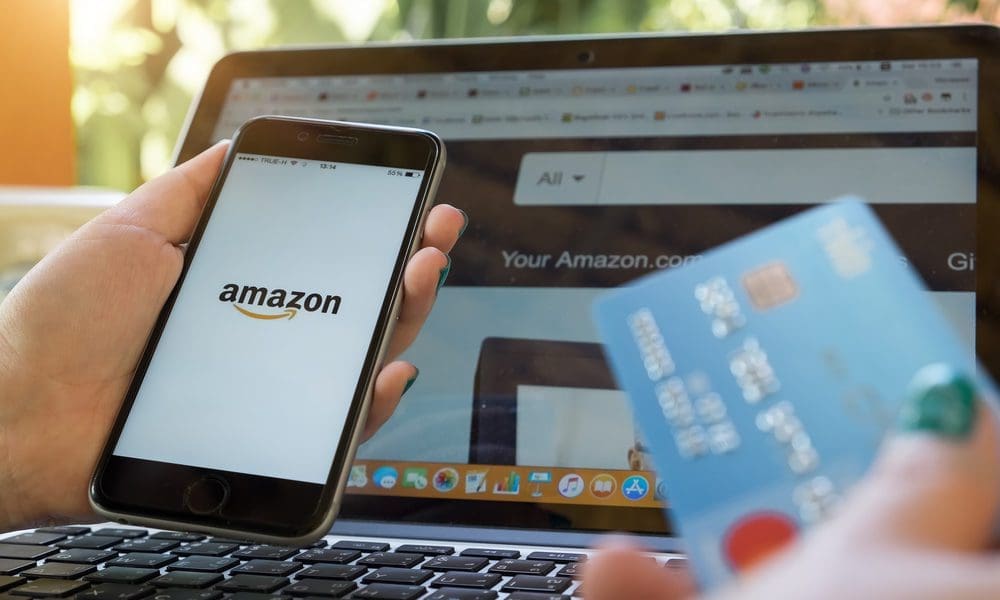
At the end of March and beginning of April, consideration for buying toiletries from Amazon increased to 23% from 10% at the beginning of March, as consumers were confronted with empty supermarket shelves. However, this figure is almost back to pre-lockdown levels with just 13.5% considering buying toiletries from Amazon — and returning to supermarkets.
Overall, it appears that consumers have settled in a pattern where some of the more extreme behaviours which prompted spikes in the data have stopped. We’ve accepted the government message to stay at home, got used to queuing, and realised that our cupboards can only hold so much pasta.
Caroline Hawkings, EVP of Savanta