





Register to get 1 free article
Reveal the article below by registering for our email newsletter.
Want unlimited access? View Plans
Already have an account? Sign in
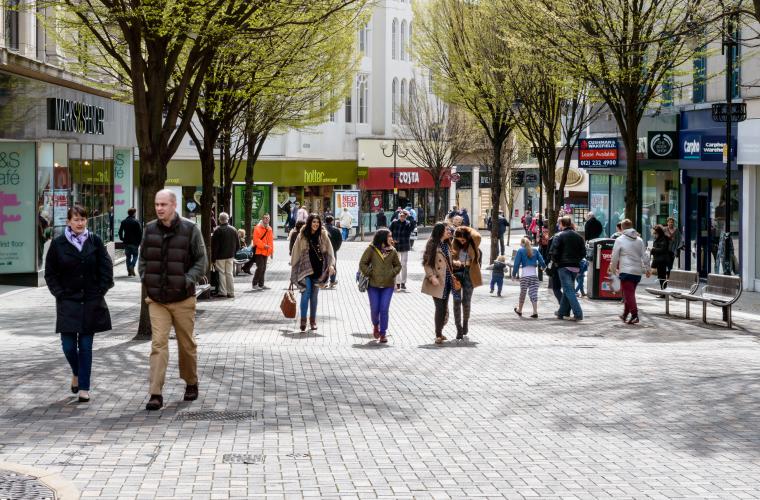
Earlier in this month, The Times reported that the number of vacant shops on UK high streets rose by more than 7,500 last year, fuelled in part by store closures from large retailers such as Mothercare, New Look and House of Fraser. Debenhams then announced that it will downsize at least thirty of its stores in an attempt to keep up with online competition.
Department stores are indeed closing, but this is nothing new. British Home Stores, Allders, Dickens and Jones, David Morgan, Woolworths and many more absorbed into House of Fraser and John Lewis have meant that well known, and what we often remember as well-loved brands have disappeared from our high street.
Last year the press was abuzz with plans of well-known department stores who had seemingly woken up to the fact that tangible retail innovation was required to maintain brand relevance and keep consumers engaged. Since then, we continuously hear of “lifestyle led experience”, champagne bars and yoga studios, pop-up shops and of in-store virtual reality experiences being the solution to encourage the dis-engaged to return to the high street.
However, when you’ve got 54 stores like House of Fraser, 182 stores like Debenhams or 1,463 stores like Marks and Spencer, making a difference can be expensive, complex and slow.
The impact of investing £200m like Harrods or £300m like Selfridges really only makes a difference when you’ve only got one or two stores. An investment strategy that has paid off for Harrods who was named the world’s best-performing luxury department store in a recently published study.
But let’s not forget that expansion, closure, relocation, conversion and downsizing are all part of retail life – reflecting the constant ebb and flow of consumer shopping patterns resulting in the need for brands to deploy their efforts elsewhere. It really is survival of the fittest and that’s the way it should be.
The problem is when this happens: On the high street of Darlington, a large market town in the north east of England, the Binns department store, which opened in 1920 and is now part of House of Fraser is earmarked for closure. Following the collapse of British Home Stores in 2016, there’s been an empty retail unit on the street, which is right next door to a Marks and Spencer that closed in August 2018.
These large, multi-floored units now form empty book ends to a once vibrant high street. So, what’s the solution? Business as usual is one option. As one retailer leaves, another moves in. But with potential tenants looking for smaller spaces, shorter leases and often with offers and services that don’t comply to restrictive use classifications, it’s likely that these units will remain empty for some time, further eroding the experience of visiting a high street.
Or, we could get creative and reimagine a new use for the building: a new co-working concept, a skate park, a cinema, or a community space with a library and a roof garden. Coming up with these exciting activations is the easy part, but you don’t know the right solutions until you ask the right questions. There needs to be a different process. A process that unlocks the true potential for each and every unique location and circumstance. What works for one high street, won’t necessarily work for another.
First, we need to listen to the people. Engage with the community to understand how they want to shop, eat, learn, experience and be entertained. Successful retailers are paying close attention to who their customers are and developing platforms that allow them to curate spaces and activations that value their customer’s time while simultaneously delivering on their brand promise.
Then we need to define a solution that also responds to the store’s geographic location, it’s history and heritage. How it connects to the town’s infrastructure. Understand the town’s personality and aspiration as well as its economic and social context.
And finally, there’s the need for stakeholder collaboration. Vision needs to be supported by a visionary team. Thankfully, communities secretary James Brokenshire is currently drafting legislation that would remove change of use laws in certain circumstances to make it easier to transform empty or poorly performing premises into the types of shops where people want to visit. A positive start, but all those with a vested interest in creating a successful high street need to work collaboratively: Government, Council, Developer, Landlord, Action Group, Tenant and Architect. Currently diverse and conflicting stakeholder agendas need to be replaced with positivity and alignment to enable opportunity and success.
Easier said than done, maybe, but the ambition should be to fill these large, empty spaces with activation and engagement that is itself a microcosm of the high street and one that can become a vibrant centre of community in its own right.
By Owain Roberts, design director at Gensler