




With peak behind them and a new trading year underway, retailers are reassessing what it will take to compete in an increasingly demanding market. Warehouse space is limited, customer expectations are higher than ever, and labour shortages remain a persistent challenge.
Our research shows 91% of retailers feel labour challenges are directly impacting performance. Efficiency is no longer a “nice to have” – it’s become the backbone of both customer experience and margin protection.
Yet despite significant investment in automation over the past decade, many retailers are still struggling to see consistent returns. The issue isn’t ambition or a lack of technology. It’s that too many automation strategies start in the wrong place.
The hidden cost of fragmented automation
Across retail, bolt-on robotics and legacy management systems have created “Frankenstein” warehouses – systems that are fragmented and unable to scale.
The impact is tangible. 61% of retailers say their fulfilment systems are damaging customer experience, while 53% of consumers say they wouldn’t shop with a retailer again after receiving the wrong item. When systems can’t communicate, data becomes fragmented, decisions are delayed and accuracy suffers. As volumes fluctuate, these brittle environments struggle to scale without costly manual intervention.
This is the unseen cost of digital duct tape: short term fixes that introduce long-term fragility.
Why software must come first
To unlock long-term value, retailers must rethink their approach. A software-first, hardware-agnostic strategy creates the foundation modern warehouses need to perform and adapt.
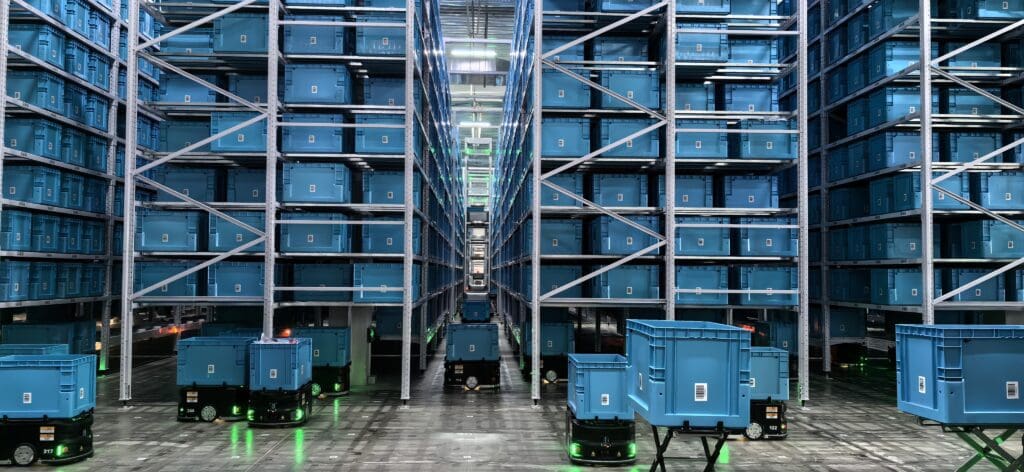
Rather than locking businesses into rigid technology stacks, this approach brings all systems – from robotics and conveyors to labour and inventory – into one connected ecosystem. It delivers real time visibility, enables ongoing optimisation and allows new technologies to be added as needs evolve.
So, whilst 87% of retailers agree robotics would improve their operations, the difference between success and a costly, one-off automation experiment, lies in implementation: choosing a model that prioritises integration, flexibility and long-term performance, not just speed to deployment.
Sustaining the system
Even the most advanced automation will underperform without sustained optimisation. Too often, systems are implemented, handed over and left to run – until something breaks.
Resilience is built differently. It requires continuous maintenance, real-time performance monitoring, regular software updates and close alignment between IT and operations. This proactive approach prevents downtime, maintains compliance and ensures systems scale smoothly as the business grows.
In a landscape where cyber threats, compliance demands and technology standards evolve rapidly, keeping automation performing at its peak is not optional – it’s essential to protecting ROI.
Delivering performance that lasts
One of the world’s fastest-growing retail brands worked in partnership with Inteq on a two-year modernisation programme, focused on enhancing its fulfilment, efficiency, accuracy and resilience.
Over the transformation period, which included a tailored maintenance programme, Inteq was able to dramatically boost picking rates and eliminate manual material handling, resulting in a 41% uplift in picking efficiency and a 40% improvement in replenishment performance. The result was a more resilient operation that consistently met customer expectations at scale, strengthening trust at a critical stage of growth.
This outcome reflects Inteq’s wider operating model, which combines its configurable IWS software suite with proactive maintenance, predictive analytics and a long-term partnership approach. Rather than treating automation as a one-off project, Inteq works alongside retailers to continuously evolve and optimise systems as volumes, channels and technologies change.
The time to act is now
The business case for smarter automation is no longer theoretical. But the real differentiator isn’t whether you automate – it’s how well your systems are integrated, optimised and sustained over time.
For retailers questioning whether their current fulfilment operation is truly fit for the future, now’s the moment to take stock. Inteq works with retail leaders to assess warehouse environments, identify performance bottlenecks and define a clear, software-first roadmap that delivers both immediate gains and long-term resilience.
If you want to understand what your automation could (and should) be delivering, Inteq can help.
Get in touch to arrange an initial assessment or discussion and discover how a more connected, continuously optimised fulfilment model can unlock measurable performance improvements across your operation.
Contributed By Jon Roberts, Sales Director, Inteq